
Acquisition Financing Readiness: What Buyers Should Prepare
On this page
Research date: September 17, 2026.
Financing preparation begins before a lender can answer every question about a target. A buyer can organize available capital, operating experience, ownership plans, and personal obligations while searching. Once a business is identified, that preparation connects with target financials and a proposed structure.
The result is not automatic approval. It is a clearer file: what is known, what is supported by documents, and what still needs a decision. That clarity helps the financing team evaluate a real acquisition instead of a headline price and a rough cash balance.
TL;DR: Prepare four things together: the buyer profile, documented capital sources, target-business financial information, and a complete proposed funding structure. Separate available cash from cash that will be invested and money retained after closing. Mark estimates and unresolved terms clearly. Underwriting still depends on the applicable program, lender, diligence, and actual transaction. SBA application guidance; SOP 8.1, Appendix 15
What should a buyer prepare before identifying a target?
Organize a factual account of capital resources, relevant experience, ownership plans, and existing obligations. These inputs help define which acquisition profiles are plausible. They do not establish that a particular business will qualify or that a lender will commit. SBA notes that the application documents depend on the loan and processing circumstances. SBA 7(a) program
Our suggested preparation includes an updated resume, a capital summary, a list of proposed investors, and a clear statement of the intended operating role. Record which funds are liquid and which depend on borrowing, sale of an asset, or another event.
Avoid treating a future investor conversation as committed capital. Its amount, timing, conditions, and terms remain open until documented.
How should available cash be divided?
Separate money available for the acquisition from money that must remain outside it. Within the acquisition budget, distinguish expenses already paid, cash due at closing, and contribution credited to the project. The distinction prevents the same dollar from being used twice in the plan. Scenario methodology
| Resource category | Preparation question |
|---|---|
| Liquid funds | Can the amount and ownership be documented? |
| Proposed borrowing | What is the repayment source and obligation? |
| Investor capital | What conditions, control, and distribution rights apply? |
| Transaction spending | What is paid, estimated, or still due? |
| Retained liquidity | What amount is deliberately excluded from closing funds? |
Under SBA 8.1, source treatment is specific; borrowed cash and outside equity are not automatically interchangeable with unborrowed buyer funds. SOP 8.1, Appendix 15
See equity injection and cash required before setting a target price solely from a cash balance.
What target information makes a financing review useful?
The financing team needs evidence supporting earnings, obligations, the proposed price, and the operating plan. Under 8.1 acquisition analysis, lenders review historical financial information, current interim statements and comparables, tax verification, management, and other required diligence. SOP 8.1, Appendix 15, “Lender’s Credit Analysis”
A practical initial package identifies the business, industry, location, price, transaction form, real-estate component, and proposed seller involvement. Include available financials with clear periods and a separate schedule of proposed add-backs.
Missing information should be named. “Latest interim balance sheet not yet received” is more actionable than “financials coming soon.” Do not fill gaps with a confident earnings figure that cannot be reconciled.
How should the documents be organized?
Assign an owner and stage to each document request. This is a preparation framework, not a claim that every lender uses an identical checklist. Its purpose is to support the source, financial, and closing verification required for the actual transaction. SOP 8.1, Appendix 15 and closing documentation
| Item | Likely source | What it helps establish |
|---|---|---|
| Buyer experience summary | Buyer | Operating and management plan |
| Source-of-funds records | Buyer/investors | Availability and contribution treatment |
| Historical and interim financials | Seller/accountant | Earnings and financial condition |
| Proposed adjustments | Seller/buyer with evidence | Support for normalized earnings |
| Sources and uses | Buyer/advisor | Complete funding requirements |
| Seller-note proposal | Buyer/seller/counsel | Repayment and contribution implications |
| Purchase documents | Transaction counsel/parties | Assets, interests, price, and conditions |
| Required reports | Lender-designated providers | Valuation and other diligence |
Use the lender’s secure process for sensitive materials. The article itself should not collect account statements or personal financial records.
What does readiness reveal about financing fit?
Readiness can reveal that the cash budget, supported earnings, or proposed structure needs revision before the buyer commits further time. That is useful progress even when it does not produce an immediate financing proposal. Commercial lending focuses on the repayment source and the conditions of the credit. OCC commercial lending guidance
For example, a buyer may have ample contribution but a target whose earnings cannot support the proposed debt. Another may have a viable target but an investor agreement that conflicts with the intended SBA contribution treatment. These are different issues and should not receive the same solution.
Use the affordability guide to combine the cash and debt tests, then the capital-stack guide to compare structures.
Is prequalification the same as commitment?
Treat each financing communication according to its actual terms and conditions. An initial review based on limited information should not be described as a completed underwriting decision. SBA’s program guidance makes clear that the lender determines required documentation for the specific application. SBA 7(a) program
Ask what has been reviewed, what remains unverified, and which conditions would change the proposed financing. Carry those assumptions into negotiations rather than converting an early conversation into a guarantee of funding.
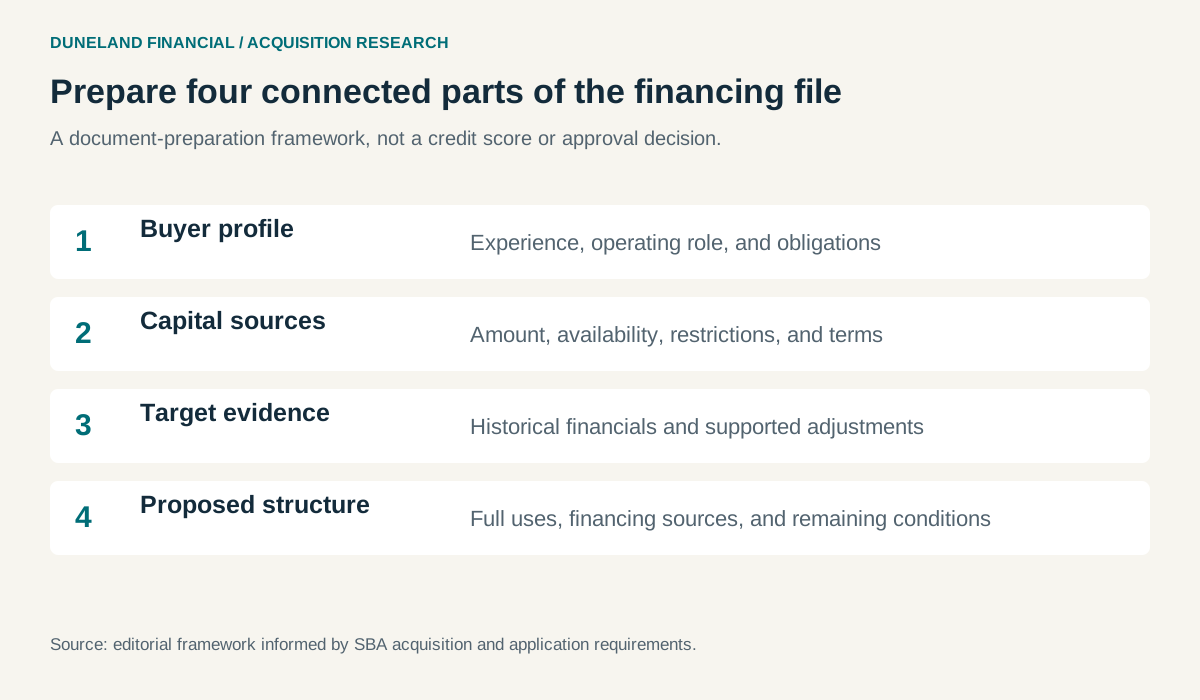
Editorial preparation framework; document completeness is not credit approval.
Frequently asked questions
Do I need a target before preparing?
No. Buyer resources, experience, and plans can be organized first. A target is needed to evaluate its specific earnings and financing structure.
Should I hide a proposed investor or seller note until later?
No. A complete proposed structure helps the lender assess external capital and repayment obligations. SOP 8.1, Appendix 15
Does a complete checklist guarantee approval?
No. Document completeness and credit approval are different outcomes. SBA program
Prepare a file that supports a decision
The purpose of readiness work is to make the acquisition’s assumptions visible and testable. Document available capital, clarify the buyer’s role, organize the target’s financial evidence, and build a funding schedule that includes the whole project.
Then identify the unresolved questions and assign the next action for each. This gives the financing conversation a practical direction and helps the buyer recognize when a price, funding source, or timetable needs to change before commitments deepen.
Start a financing review with Duneland, or work through the pre-LOI checklist.
Continue reading
- How Much Cash Do You Really Need to Buy a Business With an SBA Loan?
- SBA Equity Injection: Sources, Documentation, and Buyer Cash
- How Business Acquisition Capital Stacks Work
- Acquisition financing library